Monday, January 28, 2013

Nanoparticles, What Else Are They Good For?

Faithful blog visitors, you'll remember that we have previously dedicated a blog post to nanoparticles and the world of cosmetics dealing with anti-aging products. But perhaps some of you have taken umbrage at our vanity, and so to appease you, we will speak today about nanoparticles and their role in antibacterial products (at which only the unhygienic may take umbrage).
Silver has always been known for its antibacterial properties. The Ancient Phoenicians knew to keep water, wine, and vinegar in silver vessels to ensure freshness. Now in our modern age we have harnessed the technology to understand silver's antimicrobial properties and to repackage it into an even more efficient antibacterial agent. As it turns out, silver disrupts the bacteria's ability to form chemical bonds essential to its survival. Such bonds are the reason for the bacteria's physical structure, so when they meet the silver, they fall apart. How, though, can we make this process even more efficient?
Nanoparticles.
Scientists have irradiated silver nitrate solutions with electron beam technology to release silver ions that then group together to form the nanoparticles in use.
Silver ion nanoparticles 
This is optimal for two reasons: cost and control. Irradiation to produce nanoparticles has proven more cost-effective than using hazardous reducing agents and this can be adjusted to produce nanoparticles of a particular size, controlling their properties. If you've been paying attention to the news recently, you will know that bacterial resistance to conventional antibiotics is a growing concern for the medical community. This is why the nifty new technology of nanoparticles has been flourishing over the past couple years. And preliminary tests already show promising results. Silver nanoparticles are a straightforward, nontoxic method active against such bacteria as Staphylococcus aureus, Escherichia coli, and Pseudomonas aeruginosa, common disease-causing bacteria.

S. Aureus
E. Coli
P. Aeruginosa


If we may reveal our vain face once again, silver nanoparticles are particularly appreciated by burn victims. Antimicrobial gels using silver nanoparticles have been heralded as the best new thing, proving more efficacious than its brothers (other drugs using silver ions in their technology) in its antibacterial effects and to reduce scarring. As a result, many drugs have already been green-lighted to utilize this technology.

Elta - one of the many antimicrobial wound gels using silver nanoparticles 

As we move into the future, it seems more and more is being discovered about the benefits of nanotechnology. We have seen how it may be used to fight wrinkles but not we are seeing how it is essential to the fight against bacteria which seem to be fighting back with equal force against conventional methods. Nanoparticles are the key to the future of antibiotics. 


References:
http://www.ncbi.nlm.nih.gov/pubmed/19473014
http://www.sciencedaily.com/releases/2010/05/100524101339.htm
http://www.silverinstitute.org/site/silver-in-technology/silver-in-medicine/bandages/

andrew

Friday, January 11, 2013

Lets Mix Oil and Water Part 2: Thermodynamics


Emulsions are so fun we had to split it into two blog posts!
This post will focus and go more in depth on emulsions, particularly the thermodynamics of making emulsions:

Emulsions can be considered from a thermodynamic standpoint as well.
They are considered metastable - i.e. the emulsion has a thermodynamic drive to return to the state of lowest energy. The only point in time where an emulsion is completely stable is when it is separated. Thus, mixing two liquids will have a thermodynamic effect.

If two liquids are completely compatible, they do not form an interface, which is the surface between two different phases. In this case, the free energy of mixing is negative, because the two compatible liquids want to be together, and release energy when they mix.
However, if two incompatible components are mixed, they do form an interface, and the free energy of formation is positive because these two liquids do not want to be near each other, and thus require energy to be mixed together. As in the previous blog post, you saw how emulsifiers cause small micelles, or little balls of oil to form in the water.

Micelles are small droplets surrounded by an emulsifier suspended in liquid

This causes an increase in interfaces, because now each droplet has its own interface surrounding it, as opposed to before, when the separate layers only had a single interface between the two. The increase in interface causes more interactions between two substances that don't want to be together, and so clearly the energy and thermodynamics will be affected.

In order to get an idea about the thermodynamics of an emulsion, we can look at the Gibbs free energy of the system, which, as we learned in class, is the supreme equation of all of life, and is represented by the following equation:


The entropy (∆S) is a measure of the extent of disorder in the system and in the mixing of two liquids measures the size reduction of the droplets (or increase in the number of droplets). During the formation of an emulsion, we want to increase the number of droplets, and make each droplet smaller, and so ∆S is going to be positive.
∆H is the enthalpy of the system, and can basically be considered the energy input needed to achieve a certain average droplet size, and can be expressed by γ∆A, where γ is the tension of the interface, ∆A is the change in area of the interface, T is the temperature, and ΔS is the entropy of mixing.
Therefore, the thermodynamics of emulsions can be expressed as a derivation of the Gibbs free energy equation:

ΔG = (γ∆A) – (TΔS)


ΔG gives us information about the stability of the emulsion. If ∆G is positive, then energy is required, and so spontaneous emulsification is highly unlikely, similar to a ball spontaneously rolling back up a hill. If ∆G is negative, however, then spontaneous emulsification will occur. This happens with two liquids that are miscible, and will readily mix.
As stated above, if two incompatible components, like oil and water, are mixed, an interface is formed, and the ∆G is positive, so it will always be non-spontaneous, i.e. no matter how long you leave a bottle of salad dressing on the counter, the oil and water will never magically mix. However, the closer ∆G is to zero, the easier the emulsification process.
The oil and water here will never mix unless you add some energy to the system

Let's try to better explain ∆G and emulsion formation with some fun diagrams!


Free energy of emulsion formation (between components 1 and 2)


In general, γ∆A >> T∆S


and so ∆G >> 0


the formation of an emulsion requires energy


Free energy of emulsion breakdown


∆Gbreak << 0
(if ∆Gform >> 0)


Breakdown is spontaneous


Considering the thermodynamics of emulsions is important because it can help cosmetic companies figure out how their lotions and creams will react over time. Because breakdown of an emulsion is spontaneous, ultimately, all lotions and creams will separate into their separate components, but the addition of emulsifiers can slow this process down, or make it easier to evenly mix the oil and liquid by lowering ∆G.


Watch out! That lotion you're using is thermodynamically unstable, and will break down into its oil and water components eventually


jennymu

Friday, January 4, 2013

Lets Mix Oil and Water

Happy New Year faithful readers!
Let's bring in 2013 with more about the chemistry behind cosmetics.
Expect more posts in the coming year with more of an emphasis on the chemistry that takes place in manufacturing of cosmetics. :)

Today we're going to talk about emulsions:
Listen to this helpful podcast from BASF "The Chemical Reporter" to get some background information on emulsifiers


Emulsifiers, or surfactants are molecules that have special properties. They contain two parts: one that can dissolve in water (the hydrophilic end) and one that can dissolve in oil (the hydrophobic end). You will see this structure again in our upcoming blogpost on soaps and saponification, so keep it in mind.

Basic structure of an emulsifier

Emulsifiers are used to reduce the tendency of oil and water to separate into layers by forming an emulsion. An emulsion is formed when tiny droplets, called micelles, of one liquid are suspended in a another liquid.
Emulsifiers change the surface properties of liquids. The hydrophobic tail of these molecules burrows into the oil, leaving the exposed hydrophilic head out to bind to water molecules. When the oil and water mixture is agitated, micelles will form.


What do emulsions look like?
Emulsions usually have a cloudy appearance, because of all the different phase interfaces, which are the layers between two different phases, and in this case, the two different immiscible liquids. When you just have oil and water in a cup, the oil and water form two separate layers, with one interface, between them. However, when you add an emulsifier, and mix them together, small micelles will form with interfaces around each micelle. All these interfaces scatter light as it passes through the emulsion, giving it a cloudy appearance.
Emulsions appear white when all light is scattered equally, but if an emulsion is dilute enough, there are less micelles in solution and shorter wavelength light will be scattered more, making the emulsion appear more blue. If the emulsion is concentrated enough, longer wavelengths will scatter more, and the emulsion will be yellower. An example of this would be skimmed milk, compared to creams. Speaking of creams, comparing the creams that are used for skincare to just lotion (provided there is no artificial coloring) will also demonstrate this effect.

But why are emulsions important in cosmetic chemistry?
The majority of Skin Care products and a very significant percentage of toiletry products are emulsions. The basic components of these formulations are emulsifiers, emollients, and consistency enhancers. The chosen emulsifier for a product is not only crucial for the stability of an emulsion (and thus the preventing of separation, which no one wants), but also has a large impact on consistency, skin feel, and care properties of a formulation. Emulsifiers have a wide range of applications in cosmetic products. They are used in creams, lotions, sprays, and foams.
For the purposes of this blog post, we will be focusing on the emulsions of creams and lotions, and leave sprays and foams for another blog post.

Here is a helpful table of common emulsifiers used in cosmetic products:


What we've talked about so far is nice, but lets delve deeper, and look at the thermodynamics of emulsions. Stay posted for the second part of the blog post, to be published on January 11th


jennymu

Wednesday, December 26, 2012

Sunscreen: Chemical vs. Physical

Sunscreen (sunblock, suntan lotion, sun cream or what ever else you have heard it called) is meant to protect your skin from potentially harmful UVA and UVB rays. These ultraviolet rays are what cause sunburn. Most sunburns are the result of overexposure to UVB rays (260-320nm in sunlight).

For maximum protection from UV rays, it is important to apply sunscreen about 20 minutes before you go outside, and to reapply it every two hours. However, if you are going in the water, you should apply more often as water resistant sunscreens only protect for between 40 and 80 minutes.

There are two different types of sunscreens: chemical and physical.

Chemical:

Chemical sunscreens contain ingredients that actually absorb UV rays. Some common ingredients in these sunscreens are avobenzone, oxybenzone, Tinosorb M, Tinosorb S, Mexoryl SX, and Mexoryl XL. These ingredients absorb harmful UV rays and convert them into harmless energy. Ingredients like Tinosorb M and S and Mexoryl SX and XL protect skin from both UVA and UVB rays.

If you plan on using sunscreen containing avobenzone make sure that it also contains a stabilizing ingredient like octocrylene. Avobenzone needs to be stabilized because it degrades when it comes in contact with sunlight. About 56% of beach and sport sunscreens contain oxybenzone according to the Environmental Working Group (EGW).


Many toxicology experts believe that oxybenzone is an unsafe ingredient that can lead to hormone disruption and cell damage. Here is an article discussing exactly that. It is suggested that children avoid using sunscreens containing oxybenzone until more research is done.

Physical:

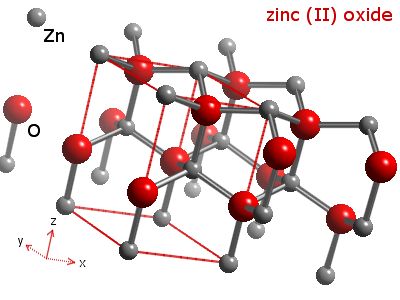
Physical sunscreens usually contain particles of zinc oxide or titanium dioxide which sit on the surface of your skin and deflect UV rays. The size of these ingredients is usually 20 to 200 nanometers.

A possible problem with this type of sunscreen, according to new research from the Missouri University of Science and Technology, is that a chemical reaction happens when zinc oxide is exposed to sunlight. This chemical reaction produces free radicals that may increase risk of developing cancer because these unstable molecules can cause damage to cells and their DNA as well as kill them entirely. The longer zinc oxide is exposed to the sun, the more it can cause damage to cells. However, the scientist who conducted this research, Dr. Yinfa Ma would "still advise people to wear sunscreen. Sunscreen is better than no protection at all."

Today, sunscreen is available in both creams and sprays. However, the EWG does not endorse the use of spray-on sunscreen as the nanoparticles of these metal oxides can be inhaled and their effect on our bodies is not yet known.

So if so many of the ingredients in these sunscreens are potentially bad for our bodies, what should we do?

Interestingly enough, different foods can actually increase your internal sun resistance. Foods containing a lot of antioxidants as well as super foods help with this. Astaxanthin, a dietary supplement, contains fat-soluble carotenoids that are carried to skin cells to protect the cells from UV exposure. There are also natural sunscreen products for sale, although the FDA does not allow them to be labeled as sunscreen, that may be safer for your skin!

Katie Rigdon

Sources:
http://news.mst.edu/2012/05/sunscreen_ingredient_may_pose.html
http://www.medicalnewstoday.com/articles/176441.php
https://www.pharmacymix.com/physical-vs-chemical-sunscreens.htm
http://www.naturalnews.com/032815_sunscreen_chemicals.html

Tuesday, December 11, 2012

How do skin lighteners work? Arbutin's role in cosmetics


At one point or another we've all seen our mothers or grandmothers dabbing their face with cream. Look inside their purse and you'll find a small container called "Skin Lightening Cream" boasting to "get rid of all your dark spots to make you look 10 years younger!" Have you ever stopped to ask yourself just how these creams can lighten your skin? Well many utilize a chemical called arbutin to aid in this effort. Arbutin inhibits the enzyme tyrosinase - an enzyme that controls the synthesis of melanin. Inhibit this enzyme and produce less melanin, thus making less pigment and lightening the skin.
Structure of tyrosinase 
Simply put, arbutin is a chemical with a glucose attached to a hydroquinone - an organic compound featuring two hydroxyl groups bonded to a benzene ring.

Arbutin - glucose and hydroquinone
Hydroquinone


However, it is important to understand that there are different types of glycosidic bonds between the glucose and hydroquinone that produce different behaviors of the chemical - namely, alpha and beta. Beta is the one that occurs naturally in the bearberry plant from which arbutin is extracted. Glucose residues in cellulose are bound by beta glycosidic linkages while glucose residues in starch are bound by alpha glycosidic linkages. Naturally extracted "beta" arbutin is common among the world of cosmetics while the "alpha" arbutin can only be produced in laboratories. 
A common point of contention among scientists today is "Is new always better?" Yes, we've have managed to engineer an alpha arbutin - but is it necessarily better than the naturally occuring beta? In fact, it would be false to suggest that merely because it is new it provides better suppression of melanin than the beta while staying just as safe as the naturally occurring arbutin. Until full toxicological tests are performed on the new chemical with positive results should the shift be made towards the new alpha arbutin as the most common skin lightening agent. It is in the opinion of Hannah Sivak, PhD that "novelty in a chemical is not an advantage but a problem."

Source: http://www.skinactives.com/blog/2011/04/28/guide-what-is-arbutin-the-most-common-skin-lightener/


andrew kang 

Saturday, November 24, 2012

Debunking the Myths - Sodium Lauryl Sulfate

You may have seen this ominous email floating around in your inbox somewhere:

Source: snopes.com

But take the warning with a grain of salt, as not everything in this email may be true... First of all, there is an inherent error within the email chain. It states Sodium Laureth Sulfate, and abbreviates it to SLS, while SLS is actually Sodium Lauryl Sulfate, and the abbreviation for Sodium Laureth Sulfate is SLES. The difference between the two compounds is small, with just an additional ether group in SLES. SLES tends to be a little less irritating to the skin, but other than that, the compounds are pretty much the same.
But with that little bit of snarkiness aside, let's take a closer look at the compound in question:

Sodium Lauryl Sulfate

Structure of Sodium Lauryl Sulfate


SLS is an anionic synthetic detergent, which means that it is a long carbon chain to which a sulfate group (-SO4) is attached, forming the negatively charged (anionic) part. The 12-carbon tail attached to the sulfate group gives the material its amphiphilic properties, or both water loving and water hating. The carbon end of the compound is the nonpolar, hydrophobic side, while the sulfate side is the negatively charged, polar, hydrophilic part. Amphiphilicity is required of detergents, because it needs to be water hating, so it can attach to the oils and greases to be removes, and water loving, so it can be rinsed off easily with water. This property is what makes SLS so abundant in things like shampoos and soaps etc.
However, SLS still does pose some threats. SLS has been found to have many side effects, such as:

  • Eye, skin and mouth irritations
  • Membrane alterations
  • Harmful to the brain, heart, spleen, liver
  • Chronic irritant contact dermatitis
  • Harmful to normal cell function
  • Corrosive to hair follicle, and can cause hair loss
With a rap sheet like this, you might wonder why SLS is used in virtually all shampoos, toothpastes, mouth washes, and more. Well while the above may be true for SLS, the concentration of SLS in these common products is too low to make a difference. Also because our skin only comes in contact with the products for a short amount of time, it doesn't affect it in any noticeably way. As long as you don't marinate your scalp in it every night, SLS will not cause any harm

Even if all these harmful effects were possible of SLS, nowhere on that list is "carcinogen". So how did the myth of SLS being a carcinogen come to be?
Back in the 70s, due to sketchy manufacturing processes, small amounts of nitrosamines, which are carcinogens, entered into the shampoos. Somehow, the dubious rumor began that SLS reacted with formaldehyde to make nitrosamine. However, anyone with half a brain can figure out that since first of all, nitrogen is absent in both of those compounds, there is no way to put them together to make a nitrogen containing compounds

It would take some pretty strong, black magic to make this reaction happen
SLS + Formaldehyde --> R1N(-R2)-N=O???
Therefore, the myth that SLS is a cancer causing compound found in shampoos is FALSE. While it is true that it can be a potential skin irritant, and have dangerous side effects, we are not exposed to it for a long enough time and at a high enough concentration for it to actually affect us. So by all means, continue lathering away with your safe shampoos and soaps!


jennymu

Friday, November 9, 2012

Antioxidants and Aging

In the cosmetic world, anti-aging creams are popping up with increasing frequency. They claim to make you look decades younger by removing wrinkles, spots, and giving you a youthful glow. Seems like a miracle to me. Such miracles don't come cheap either, with prices in the hundreds being average. Is a jar of this anti-aging cream worth it, or is it just empty promises in a nice little package? We'll take a closer look at one of the major contributors of aging, and how cosmetic companies combat it.

Oxidative stress is one of the leading causes of aging signs, so it makes sense that many cosmetic companies try to target this when developing anti-aging products. This post will give more insight into what oxidative stress is, and the method by which these companies try and reduce it.

Here is a helpful introductory video:


The human body needs a balance in redox reactions. "Redox" is a scientific term used to describe chemical reactions that involve the addition or reduction of electrons to molecules, thus altering oxidation numbers or "oxidation states". Reduction is adding electrons to an atom, and oxidation is removing electrons from an atom. The result of this change can be destructive (think rusting iron, a commonplace example of oxidation). Therefore, oxidative stress is basically an imbalance between the production of free radicals, the oxidizing agent, and antioxidants, which are reducing agents. When there are too many free radicals to be reduced by the antioxidants, this creates oxidative stress within the body.
Free radicals are electronically unstable atoms or molecules capable of stripping electrons from any other molecules that they meet in an effort to achieve stability. In their wake, they create even more unstable molecules that attack their neighbors in a domino-like chain reactions. This causes extensive damage to the cells.
Disturbances in this normal redox state in the body can cause toxic effects due to the production of free radicals that will inflict molecular damage to the proteins, DNA, lipids, and other biomolecules in your body, in a process called "oxidative stress". Oxidative stress basically is an imbalance between the production of free radicals, reactive oxygen species,  and antioxidants defense species. This way, the free radicals, the oxidation part, end up overwhelming the antioxidants, which are reducing agents, and so we see oxidation of important molecules such as proteins, lipids, etc.
This oxidative stress can lead to premature signs of aging, one of the biggest fears most women have.

Premature aging: a woman's biggest fear

It seems intuitive, therefore, that one of the best ways to fight these free radicals is to up the amount of antioxidants. These antioxidants are able to neutralize the free radicals, and prevent them from damaging the cells in your body. While many creams include antioxidants in their extensive list of ingredients, is topical application really the best way to go? A 2011 study investigated this very question. The study looked at antioxidant levels in the skin after using them both topically and systemically. 129 healthy women, aged between 21 and 72 years, were divided into seven groups and given topical creams, oral supplements, both, or a placebo. Ultimately, the oral supplement group had the best results, sometimes even beating out the group that had both topical and oral. The human skin is a difficult barrier to penetrate, in order to keep out all the germs that cause diseases, and sometimes this can work negatively when it comes to things like antioxidants. Therefore, the best way to go about getting your daily dose of antioxidants is orally, through food.

Foods rich in antioxidants

Sources: 
http://www.sciencedirect.com/science/article/pii/S0923181110000782
http://www.ccjm.org/content/73/12/1049.full.pdf
http://www.wiley.com/college/boyer/0470003790/reviews/redox/redox.htm
http://www.healthchecksystems.com/antioxid.htm

jennymu